Science, history and culture Science and society
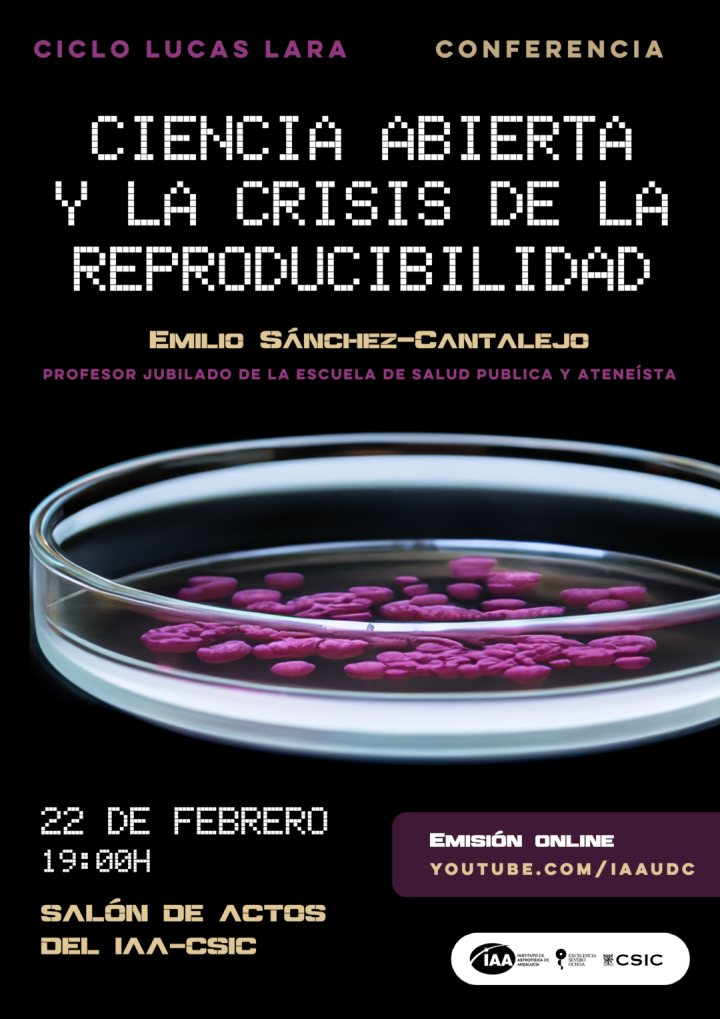
Open science and the reproducibility crisis
Emilio Sánchez-Cantalejo School of Public Health
The video loads from YouTube (privacy-enhanced mode) only when you press play.
About the lecture
Science is a fantastic and gigantic human enterprise in which more than nine million people are estimated to be involved and in which more than one and a half trillion euros are currently invested worldwide every year. The scientific method is the tool that has characterised science in pursuing its goal of knowing and understanding the natural world around us.
Reproducibility is a fundamental property of scientific activity, whether observational or experimental, because without it the results of scientific studies lack the required validity, which brings discredit on science in the eyes of society and wastes the resources invested in such irreproducible research.
The lack of reproducibility in science is not a new problem, but it has recently taken on such dimensions that we must admit there is a so-called reproducibility crisis; it does not affect all branches of science equally, but it matters in all of them. The main cause is failure to follow the scientific method strictly, for very diverse reasons.
Open Science is a new paradigm that, among other aims, seeks to overcome these problems by improving how scientific output is produced, funded, communicated and assessed.
Text of the official description published by IAA-CSIC on YouTube.